Infra Play #154: What are CIOs buying?
There is an old principle in tech that companies tend to perform best financially when they can monetize late-majority and laggard buyers.
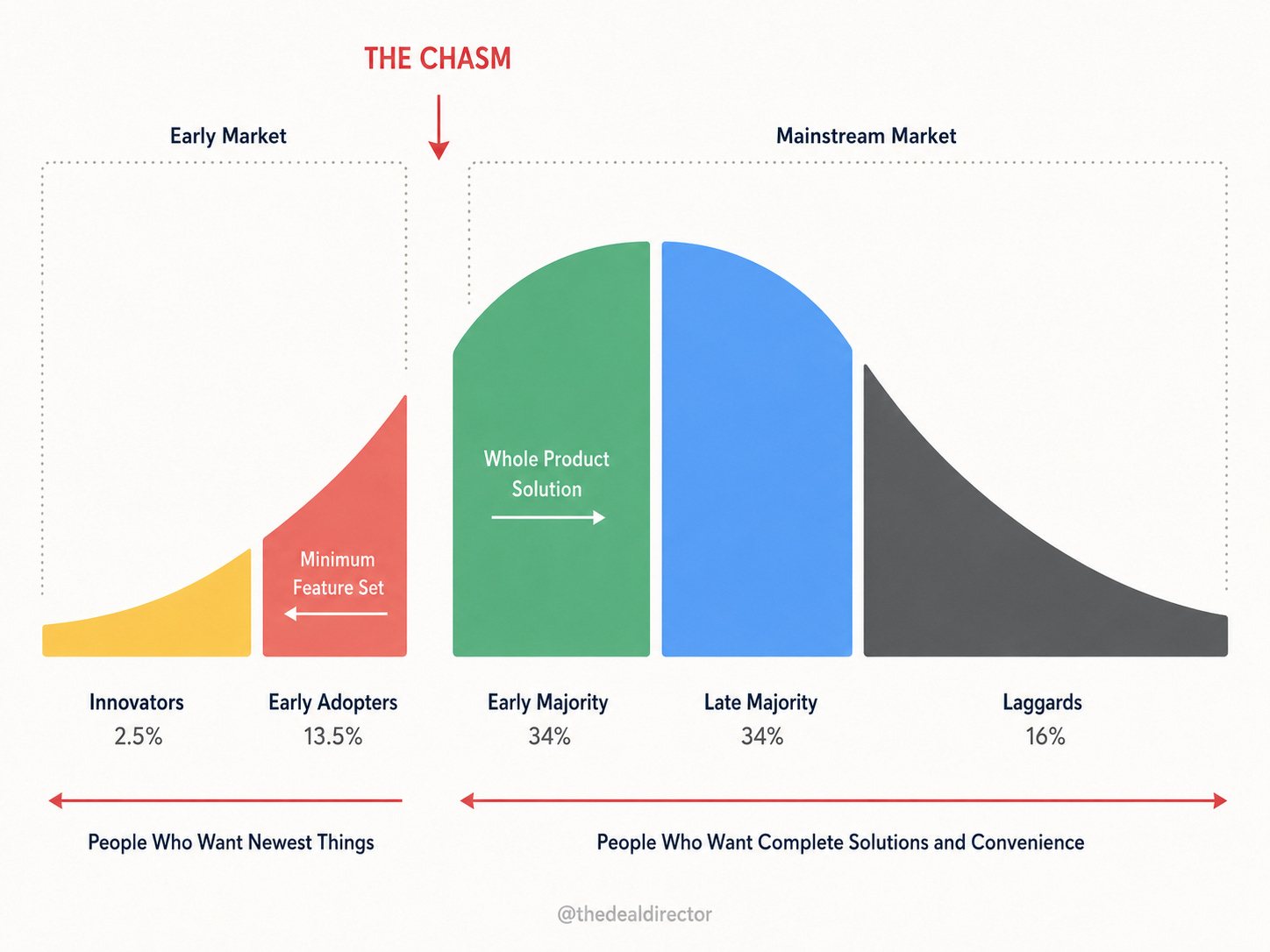
As such, it's important to track how trends are shifting between different groups, particularly at a time of uncertainty ("are we going to reinvent the economy with AI, or is everybody going to be on food stamps?").
2026 IT Budget Growth Expectations Tick Higher
2026 IT budget growth expectations moved higher quarter over quarter to 3.8%, coupled with a strong inflection in the one-year up-to-down ratio. That points to a healthier budget environment. Winners remain selective, though, as CIOs get more discerning about where dollars flow. Microsoft and security screen clearest.
Software leads, everything else decelerates
Software remains the fastest-growing industry in the technology sector and the only major one expected to accelerate year over year. CIOs expect 4.1% growth in 2026, up 29 basis points from 2025. Communications (2.6%, down 12 bps), hardware (1.6%, down 4 bps), and services (1.8%, down 34 bps) are all expected to decelerate.
Sequentially, 2026 budget growth expectations were revised higher across every IT industry except services. Communications led at 35 bps quarter over quarter, followed by hardware at 12 bps. Software was effectively flat at 3 bps. Services deteriorated by 23 bps.
Near-term revisions turn positive
The one-year up-to-down ratio for potential IT budget revisions improved to 1.2x from 0.8x in 1Q26. Thirty percent of CIOs expect upward revisions versus 25% expecting downward revisions. That is the first reading above 1.0x since 1Q24.
Long-term trends improved modestly. The three-year up-to-down ratio ticked up to 2.8x from 2.7x in 1Q26, with 42% of CIOs expecting IT spending to increase as a percentage of revenue over the next three years against 15% expecting declines. The ratio still sits below the trailing survey average of 3.7x.
CIO priorities
AI and ML remain the number one priority at 18.0%, followed by security software at 11.3% and digital transformation at 10.0%. The increase in AI and ML prioritization is encouraging, but its net defensibility fell to 4% from 10% quarter over quarter. CIOs are becoming more discerning about which AI initiatives are truly protected.
What it means
The improving headline data supports optimism in certain areas of IT budgets. It does not support a structurally more positive view on application software broadly. Software’s 2026 growth expectations were effectively unchanged sequentially, and vendor-level spending intentions remain dispersed.
The range of winners stays narrow. Microsoft again screens as the clearest public beneficiary across incremental GenAI spend, agentic automation, custom AI application preferences, and enterprise distribution. LLM providers are gaining direct CIO relevance as a secondary source of share gain across AI-related spend and custom AI application development.
Security screens as the cleanest category-level winner given its priority, defensibility, and accelerating spend outlook.
The Morgan Stanley quarterly CIO survey is useful for identifying trends across a large pool of executive-level buyers.
Based on the industries and general responses, we can put most of these respondents in the Late Majority and Laggard waves. That makes the responses all the more interesting, even after adjusting for Morgan Stanley shilling their bags.
We should note that "none of the above" is listed at 15% in the survey, so there are plenty of companies winning increased market share. Still, the interesting direction here is that the hyperscalers (Azure, AWS, and GCP) plus what we should presume is OpenAI and Anthropic (LLM providers) will win more than half of the AI spend in large enterprises over the remainder of the year.
If forecasted over the next three years, however, things look quite different. The same group will win 70% of AI workloads, and the figure is probably higher once you account for Cursor and SpaceXAI. We should note again that we are talking predominantly about monetizing late majority and laggards here.
Security Software Spending Expectations Accelerate Meaningfully
CIOs expect security spending to accelerate meaningfully in 2026, with growth of 12.4% versus 8.9% in 2025. That is up 306 basis points from the 9.4% expectation in the 4Q25 survey.
The magnitude of the step-up is notable. Three factors likely drive it:
Replacement of technical debt. Legacy and off-maintenance infrastructure represents an immediate vulnerability and supports firewall refresh activity. Higher memory costs also raise the price of newer firewall appliances.
Automated SOC and SIEM investment. Security analysts face rising alert volumes and a growing mix of AI-enabled attacks. That drives demand for automation and pushes more data through SIEM platforms.
AI security. Enhanced identity and data security matter more as enterprises begin deploying GenAI applications broadly.
Security remains one of the cleanest areas of durability in the survey. It ranks as the number two CIO priority at 11.3% of responses, up from 10.7% in 1Q26. It also scores as the most defensible IT project, with a net defensibility score of 15%, up from 12% in 1Q26.
Net: accelerating spend expectations, high CIO prioritization, and leading defensibility support a positive outlook for security software within the broader software cohort. CIOs appear willing to protect security budgets even as other areas of software stay mixed.
Cybersecurity continues to be one of the key growth areas in software, as most companies realize that securing their IT infrastructure is a competitive advantage rather than a cost.
If we look at the full scope of tech spend, AI and security remain the key areas of investment, often with significant synergies between them.
Company investments in AI implementations with their preferred vendors are also increasing, as the leading vendors try to win market share. Interestingly, for certain high-growth vendors (Databricks, Datadog), we are seeing actual quarter-over-quarter improvements in winning new workloads.
The big challenge for those SaaS players, however, is the continued push by the hyperscalers and LLM providers, assisted by an army of forward deployed engineers, to build custom applications for those customers.
How successful that approach will be remains to be seen. Palantir paved the way for this motion, but there are rumblings about the actual outcomes of these projects.
Macro: Key Takeaways
The survey covered 76 US and 24 European CIOs on their external IT budgets and the current spending environment. Key macro takeaways from the 2Q26 survey:
Budgets
CIO expectations for 2026 IT budgets accelerated for a second consecutive quarter to 3.8% growth, up from 3.7% in the 1Q26 reading and from 3.7% growth expectations for 2025. Growth expectations remain below the 4.1% average from 2010 to 2019. The data points to a stable-to-improving spending backdrop, with budget optimism inflecting toward trailing survey averages.
CIOs still expect software to remain the fastest growing IT industry in 2026, though sequential improvement was muted. They expect software spending to grow 4.1% in 2026, up 29 bps year over year, followed by communications (2.6%), IT services (1.8%), and hardware (1.6%).
Sequentially, expectations for 2026 budget growth were revised higher across every industry except services. Communications led at 35 bps quarter over quarter, followed by hardware at 12 bps. Software was effectively flat at 3 bps. IT services deteriorated by 23 bps. Software remains the best industry-level read, but there is still no evidence of a material sequential inflection in software budgets.
Cloud migration and share shift
As workloads shift to the cloud, Microsoft and Amazon remain the clear beneficiaries, though LLM providers are emerging as a secondary share gainer. Microsoft remains the top expected share gainer from cloud migration in both 2026 and over the next three years, with net scores of 42% and 37%. Amazon follows at 17% and 13%.
Results also point to budget share shifting toward LLM providers, which screen as an emerging beneficiary in both the one-year and three-year views at 2% and 7% net scores. Dell, Oracle, HPE, Cisco, and VMware continue to screen as likely share donors as workloads move from on-premise to cloud.
CIOs expect continued momentum in the shift to public cloud, and the current workload mix still tracks ahead of historical migration trends. The 2Q26 data suggests 48% of application workloads run in the public cloud today, up from 47% in 4Q25 and 44% in 2Q25. CIOs now expect 52% of application workloads to run in the public cloud by the end of 2026 and 66% by the end of 2028. That sits modestly below the 67% and 68% three-year expectations in 4Q25 and 2Q25, but still implies continued migration from on-premise environments.
New to the survey, CIOs estimate 8% of workloads reside in colocation and managed hosting today. That share is expected to hold roughly stable at 7% by the end of 2026 and 2028. This reads as incrementally positive for scaled operators Equinix and Digital Realty, as colocation remains a durable component of enterprise IT architecture.
How AI gets funded
AI initiative funding remains meaningful, but it is less cleanly additive as reallocation rises. In 2Q26, 33% of CIOs fund AI and LLM initiatives through net new IT budget dollars, down from 37% in 4Q25 and 39% in 2Q25. Another 21% cite net new budget from outside IT, down from 24% in 4Q25 but up from 17% in 2Q25. Combined, net-new funding sources account for 54% of responses, down from 61% in 4Q25 and modestly below 56% in 2Q25.
At the same time, CIOs increasingly fund AI through budget trade-offs. IT budget reallocations total 32% in 2Q26, up from 23% in 4Q25. That breaks down as 15% from existing software budgets, 6% from professional services, 6% from another area of IT budget, 3% from hardware, and 2% from communications and data networking. Reallocation from non-IT business unit budgets declined to 8% from 13% in 4Q25.
AI spend still looks more additive than cannibalistic. The funding story is less clean than 4Q25, and it increasingly includes trade-offs within existing IT budgets.
Where GenAI is deployed
Initial indications point to IT operations (47%), software development (44%), customer service (33%), and supply chain and inventory management (15%) as the business units most widely adopting GenAI today.
Drilling into the impact on cost profiles, CIO usage of generative AI is driving cost reductions in customer service (down 1.8%), HR and payroll (down 1.5%), and corporate finance and strategy (down 0.8%). ROI in supply chain and inventory management (up 1.2%) and software development (up 0.8%) is driving budget increases.
Pricing
Vendor discounting appears broadly stable, with mixed signals on pricing behavior. In 2Q26, 35% of CIOs perceive vendors as more aggressive in discounting, modestly above the 31% and 32% readings in 3Q25 and 2Q25. Another 27% report vendors have become less aggressive, and 38% report no change. The pricing environment is not deteriorating meaningfully, though vendors remain willing to discount in select areas.
Interestingly, a lot of the AI spend comes from new budgets, often funded in part by aggressive layoffs undertaken in order to "reinvest capital."
Still, legacy software gets hit too, along with consulting. This is partly why the software vendors with large market share in those areas have been going aggressively after their own AI implementations, hoping to offer a different variable that could increase stickiness (and ARR).
In order to actually win some of that incremental AI spend, however, companies need to be aligned with where their customers are trying to get the most benefit: increased productivity and revenue.
This is a good indication that the group here represents late majority and laggards, as many companies have already adopted tools like Claude Cowork into their workflows, with significant benefits.
Enterprise Software: Macro Takeaways
Better budget air cover, though application software still needs more evidence
With the broader IT budget backdrop improving and the one-year up-to-down ratio moving above 1.0x for the first time since 1Q24, software investor focus has shifted back toward whether improving AI momentum can drive a more durable inflection in software budgets.
Software remains the fastest-growing IT industry, with CIOs expecting 4.1% growth in 2026, up 29 bps from 2025. Even so, there is not sufficient ammunition this quarter to become structurally more positive on application software broadly. Sequentially, software spending expectations were effectively unchanged, up just 3 bps quarter over quarter. Vendor-level spending intentions remain highly dispersed, with Microsoft and ServiceNow the only tracked vendors expected to accelerate versus the 4Q25 survey.
Funding data also argues for selectivity. AI spend still appears more additive than cannibalistic, but combined net-new funding sources declined to 54% in 2Q26 from 61% in 4Q25, while reallocations within existing IT budgets increased to 32% from 23%. That includes 15% pulled from existing software budgets, up from 13% in 4Q25.
The survey supports a more constructive software backdrop than prior reads. It does not support a broad application software inflection. Three software-specific takeaways from the 2Q26 CIO survey follow.
1. Application software results remain mixed
Across application software coverage, 2Q26 survey data still does not provide enough evidence to become structurally more positive on the group. Vendor-level spending intentions remain dispersed. Microsoft and ServiceNow are the only tracked software vendors where forward-year growth expectations accelerated versus the 4Q25 survey. Salesforce, Adobe, Workday, and SAP all decelerated.
CIO expectations for vendors gaining the largest incremental share of GenAI spend also remain mixed on one- and three-year views. Salesforce improved modestly quarter over quarter, with 8% of CIOs expecting it to gain incremental GenAI spend share in 2026 (up from 7% in 1Q26) and 8% expecting share gains over the next three years (up from 7%). ServiceNow downticked on both horizons, falling to 6% on a one-year view (down from 7%) and 5% over the next three years (down from 6%).
LLM providers continue to screen as the second-largest expected GenAI share gainer behind Microsoft. Eleven percent of CIOs expect LLM providers to gain incremental share in 2026, modestly down from 12% in 1Q26, and 17% expect share gains over the next three years, unchanged quarter over quarter. LLM provider share gains did not inflect materially higher sequentially, but their positioning suggests continued wallet-share risk for incumbent application vendors not well positioned to participate in GenAI spend.
The survey points to pockets of application vendor participation in the AI investment cycle. The broader results still point to mixed vendor-level spend intentions and uneven capture of GenAI wallet share.
2. Microsoft remains the clearest winner, with a modest downtick from 1Q26
Survey data continues to underpin Microsoft’s leadership position in AI, though several AI-specific datapoints moderated from elevated 1Q26 levels.
Microsoft remains the clear number one vendor expected to gain incremental share of GenAI spending in both 2026 (27% of CIOs, down from 32% in 1Q26) and over the next three years (30%, down from 32%). Across a broad suite of agentic vendors, 36% of CIOs expect Microsoft to be leveraged for agentic automation initiatives, down from 42% in 1Q26 but still well ahead of the next closest vendor at 8%.
New survey work on custom AI application development reinforces the same positioning. Microsoft screens as the preferred vendor today at 47%, roughly stable versus 48% in 1Q26, and over the next three years at 34%, up from 32%.
The modest downtick across select AI share indicators pairs against still-accelerating Microsoft spending intentions. Across a broad suite of software vendors, CIOs expect the highest forward-year growth for Microsoft in absolute terms at 7.6%, up from 7.3% in the 4Q25 survey.
CIOs also note the top AI and LLM initiative remains broader internal employee productivity at 30% of responses. That highlights the opportunity for products like Microsoft 365 Copilot as well as potential upsell into E5 and E7 SKUs. Eighty-eight percent of CIOs expect to use Microsoft 365 Copilot over the next 12 months, up from 80% in 4Q25. The 2Q26 survey also highlights continued premium M365 monetization potential, with E7 newly broken out and CIOs expecting the combined E5 and E7 mix to reach 71% next year.
Even as LLM providers gain direct CIO relevance, Microsoft remains well positioned to consolidate software spend while monetizing GenAI across M365, Copilot, Azure, GitHub, Fabric, and broader enterprise distribution over a multi-year timeframe.
To wrap up, let's see where the "SaaS is dead" thesis stands today.
Infra Play #128: Is SaaS dead?
At the end of last week's deep dive on Salesforce, I added this quote from an experienced investor on the personal impact when a "sector dies":
In my deep dive into the topic back in January, I included this amusing (but insightful) take on what it is like to be a professional investor when a sector is struggling:
This period of time in SaaS reminds me of the living hell that is running a hedge fund when a sector dies and you have exposure.
1) You wake up, reach for your phone, see your stocks are down pre-market for the fifth day in a row on no news. Good morning!
Go get a bacon / egg / cheese and coffee from a deli - this will be the only good thing about your day and you know it.
2) Enter the office and your SaaS analyst has a grimace on his face. You don't want to have the same conversation you've had in your head and with him 30x a day for the past week so you just go eat your breakfast at your desk while reading news / research.
3) Your analyst comes in and you have the 121st version of the conversation. No new insights. You can sense he is beaten up so you go through 50 mental model / frameworks but neither clarity nor comfort arrives.
4) Morning meeting with the investment team.
Someone will invariably ask "So what's our view on this sector?" [meaning the sector that is equal to hell on earth right now]. This kicks off a conversation in which the other analysts who know absolutely nothing about the sector in question will start by asking gently probing questions of you and the analyst. This escalates to unanswerable questions that people only have the nerve to ask when a sector is dead. You have to graciously entertain these questions because the stocks are down so apparently anything goes. You start thinking that everyone in the room is stupid including and maybe mostly you.
After 20-30 min of abuse (maybe more) and at the point where you literally have no clue what you're even talking anymore ("when will this turn?), someone will mention that their buddy works at a rival fund where the PM sold the entire sector earlier that week. Another analyst will then mention "That fund is really smart" (implying you are stupid with which you agree wholeheartedly).
5) Meeting over. Now you and your analyst have another conversation, and you can see the fight leaving his body. You wonder how his physical body remains upright seeing as the spine is dissolving in real time but then realize you're not a doctor because you're not smart enough. Anyways, this chat may or may not culminate with the suggestion that "maybe we should take some off or just come back later". At this point, your brain floods with the history of your interactions including how the two of you have patiently been waiting for a "buying opportunity" JUST LIKE THIS. And now that it is here, didn't immediately go up, and, in fact, went down further, you are having to contemplate trimming or selling. You restrain yourself from smashing something but also understand your analyst who doesn't want to destroy his year by January 16th and die like this. Who does?
6) At this point, you realize you are simultaneously fighting 1) the market, 2) your primary analyst, 3) your other analysts, 4) your competition including QQQ which only goes up. And you feel very, very alone in this investment. No joke, this part truly sucks.
Most times, you probably trim some of whatever is hurting. Because at least you did something. And if it all goes to hell, you can sell more and say / feel you took the right action. And if it goes higher, well, at least you somewhat stayed. Honestly, at this point, no one will give you any credit for your actions anyways and you're just going to get whatever potential discredit results. It rarely pays or is feasible to be the hero here.
7) Day is almost over. 10 minutes to close or maybe right after, your largest, most "proactive" institutional investor like Blackstone will email "Hey - got a second to chat about Saas?". Or maybe your most unsophisticated investor. Usually both. So then you hop on the phone and explain what you know, what you think and what you did or plan to do. This is the point where having a 10 out of 10 investor like Blackstone helps because they are professional and get it so long as you are sticking to your process.
8) Go workout and feel a bit better. Go home and try to be present with the family for a bit. Then whiskey time and mentally go over everything again. Alone. To make sure you hopefully aren't impairing capital permanently and, if so, have a plan.
And that plan is to fire everyone and become a monk.
While average CIO spend might be increasing versus recent quarters, it lags significantly behind the levels of investment increases we saw during the 2020 to 2022 period. That doesn't mean companies are spending less on IT, however, simply that the hyperscalers and LLM providers are winning the majority of those increases ($74B ARR for Anthropic speaks for itself).
Are they going to "turn it around"? I think waiting for that, let alone profiting from the current state of SaaS, is a fool's game.
Cloud infrastructure software, however, is a different story. Plan accordingly, particularly as those companies capture not only traditional workloads but also a share of the AI spend.


