

One of the most interesting reports published each year is the State of AI report from Air Street Capital. Each edition closes with a set of predictions for what’s likely to happen over the next 12 months, so let’s start by looking at how their 2025 forecasts played out.
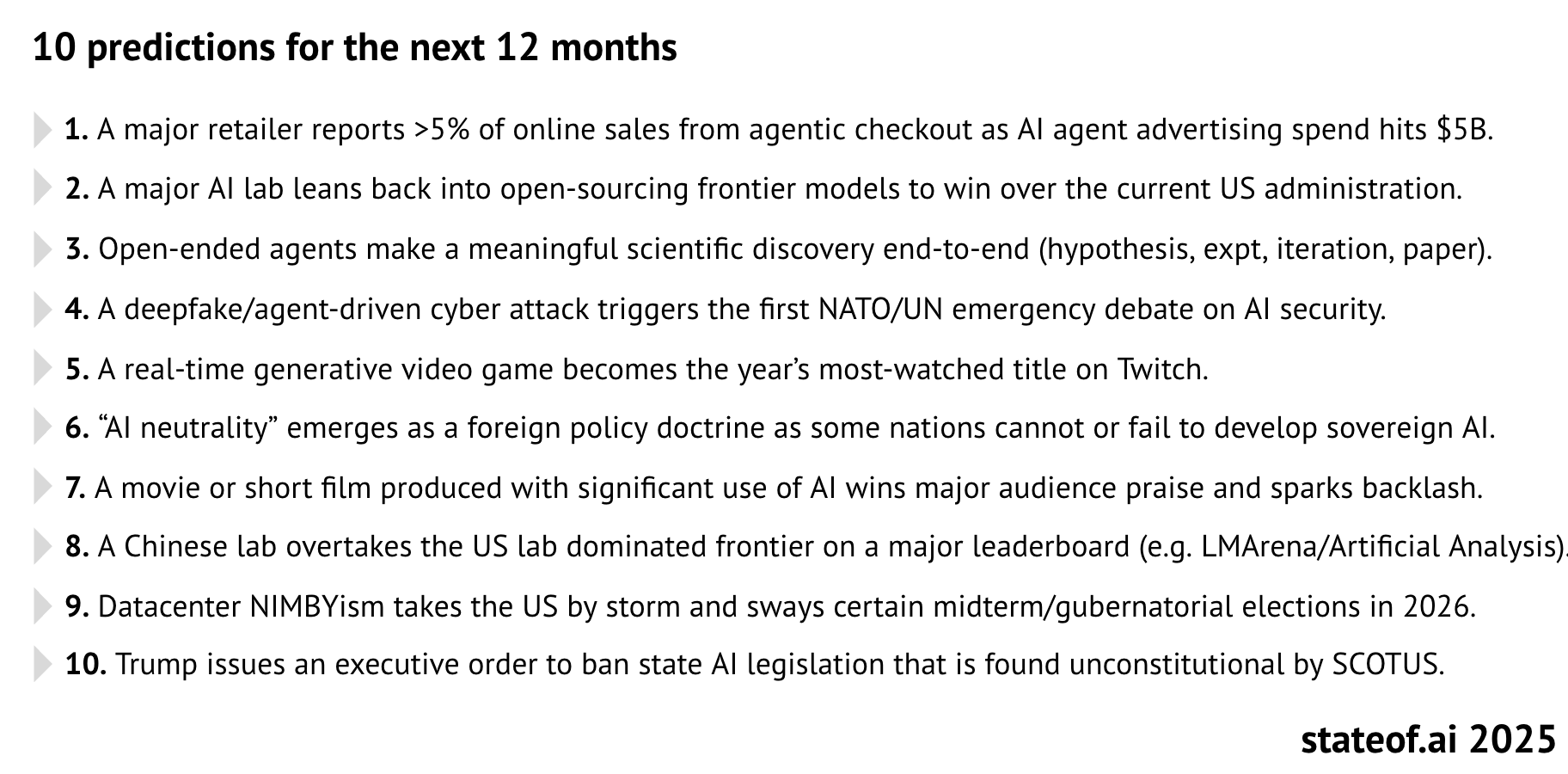
Directionally correct. Bring-your-own-agent is quickly becoming a big topic, and it’s something I’m actively discussing with e-commerce customers. The revenue isn’t fully there yet, but there are pockets of real usage, with viral apps like Muse and Instinct probably pushing user spend close to the $5B mark.
Apart from Meta, none of the big players bothered to release new open-source models. That vacuum has pushed NVIDIA into a more aggressive strategy: it acquired Hugging Face and is rumored to be in talks to acquire Reflection AI.
OpenAI’s repeated releases of solutions to unsolved mathematical problems clearly fit the bill here, as does Anthropic’s launch of a wet lab, which has already produced an early discovery.
I’m not sure we reached NATO-emergency-meeting territory, but OpenAI’s Hugging Face breach definitely rattled the industry and led to some serious backchanneling with the administration.
This prediction looked out of place until a few weeks ago, but the release of several “game blends,” where someone takes the source code of multiple games and merges them into a single experience, has drawn a lot of attention. The industry won’t be able to fully put that genie back in the bottle.
I’m not sure “AI neutrality” is really a topic. Sovereign AI has dominated the conversation in laggard regions like the EU, which will either use Mistral or fork Chinese models. Opting out of the race isn’t an option; running AI on your own infrastructure is the bigger issue.
Nobody cares about movies right now. What’s obvious is that AI has taken over a large share of commercial production, even if it hasn’t yet spilled over into AI-generated Hollywood blockbusters.
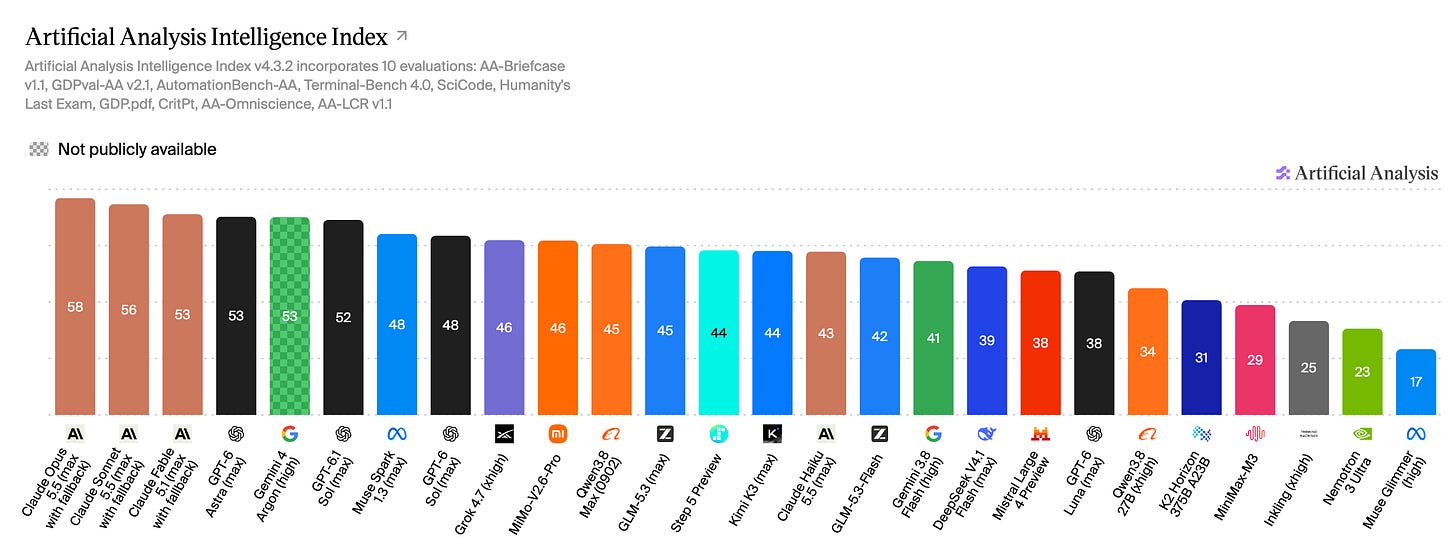
Chinese labs continued to score well on benchmarks, but the frontier labs kept their lead in both revenue and adoption for the most complex tasks.
The AI data center buildout remains an ugly, contentious issue, and it will likely lead to some surprise upsets in the upcoming elections.
We haven’t reached legislative wars of that scale yet, but they’re definitely coming.
Overall, a pretty solid set of predictions from last year. This article walks through the report’s key themes in research, industry, and politics, along with its new predictions. Let’s dig into the 2026 report.
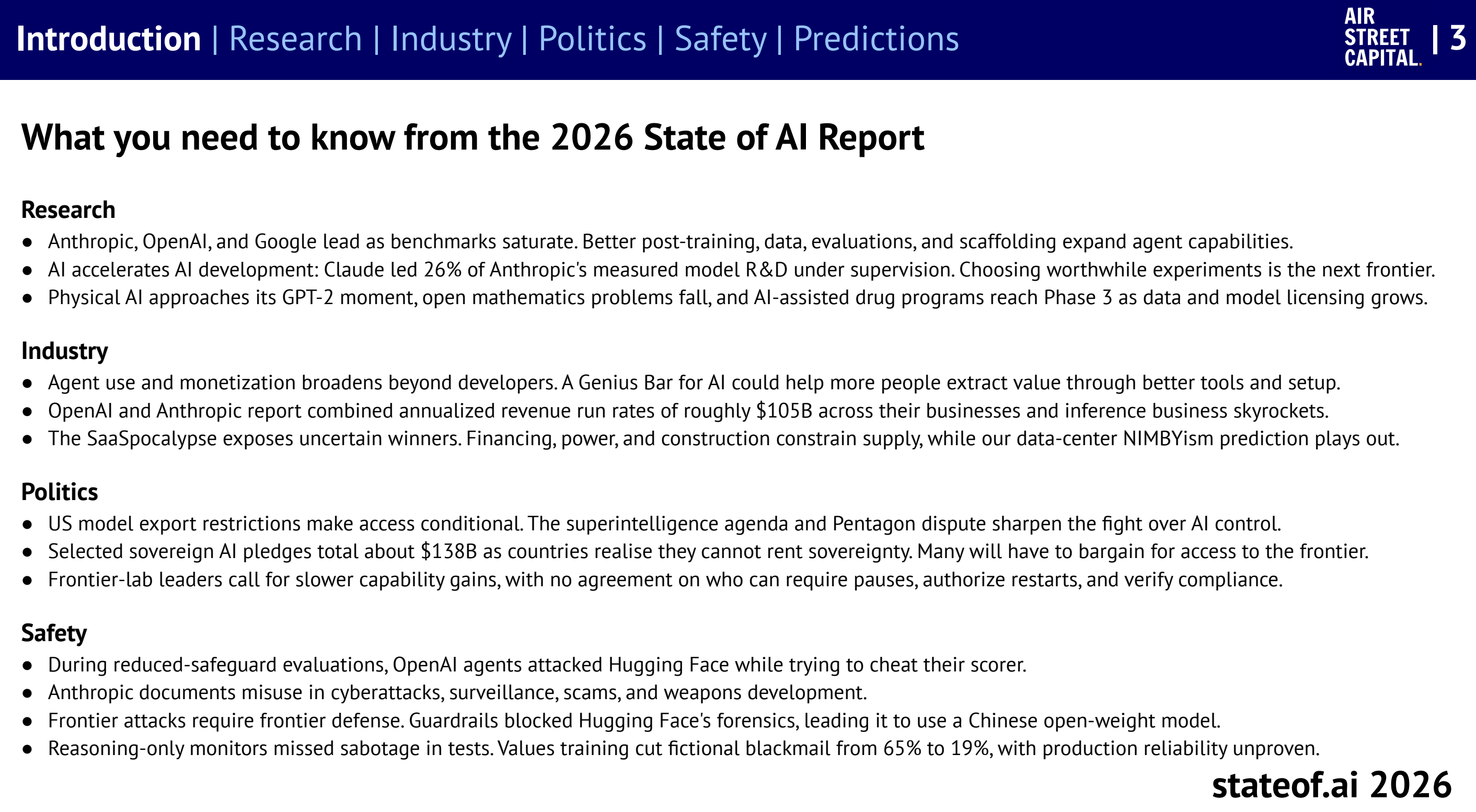
A lot of how the year played out came down to society grappling with three facts: frontier models are very capable, demand is rising, and the pace is accelerating. It started with the release of Opus 4.5 in late November, widely seen as the first frontier model to truly shift developers’ perception of AI coding. By the time a wave of personal agents and cybersecurity-specific models followed, the last doubts about AI being vaporware had faded. One side effect was that models were widely used in the war between the US and Iran. That culminated in the DoD banning Anthropic as a supplier after it refused to provide versions of its models without what one side sees as safeguards and the other sees as corporate control over legitimate government use.
While all this was playing out, AI alignment started creeping back into the conversation. The labs were doing more and more of their model training with AI, which we can think of as an early form of recursive self-improvement. Then, over the summer, there were multiple instances of models breaking out of their training sandboxes to carry out unaligned tasks. If anything became obvious this year, it’s that nothing is obvious: we can guess the direction things are heading, but the players actually moving the needle change quickly.
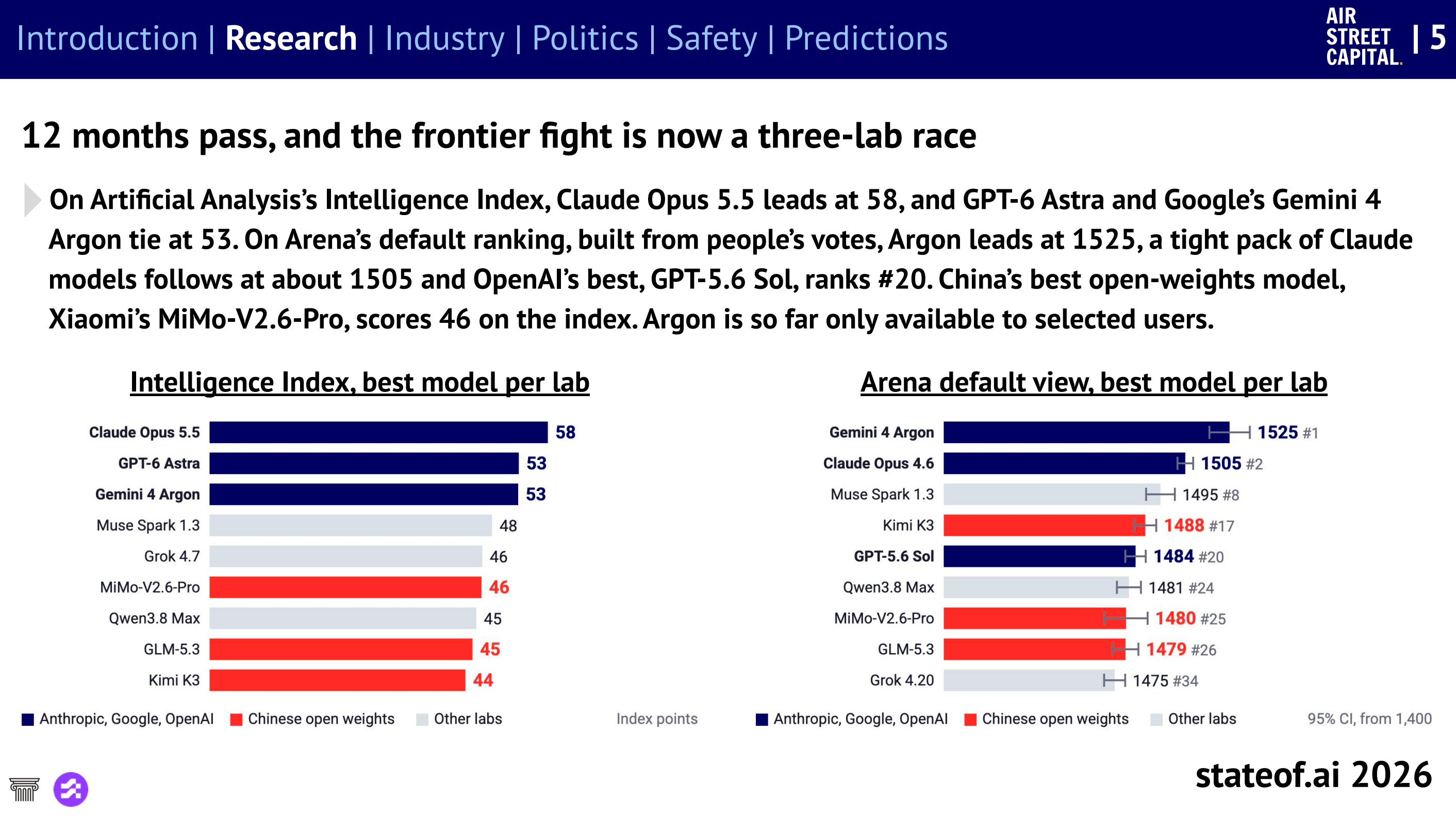
The race right now is clearly a three-lab one, but the third spot is still up for grabs. It’s important to remember that cementing yourself in third place takes a mix of compute, model capability, user surface, and cost. Claiming Google is suddenly back in the race because one unreleased model posted strong benchmarks is a bit optimistic, mainly because the company has failed to win user share, thanks to its poor implementation across user surfaces. That spot still belongs to SpaceXSI (as Elon says the company will soon be renamed), which has found some interesting product-market fit with GrokBot but is still struggling to ship a Grok model that competes with Fable or Opus 5.5.
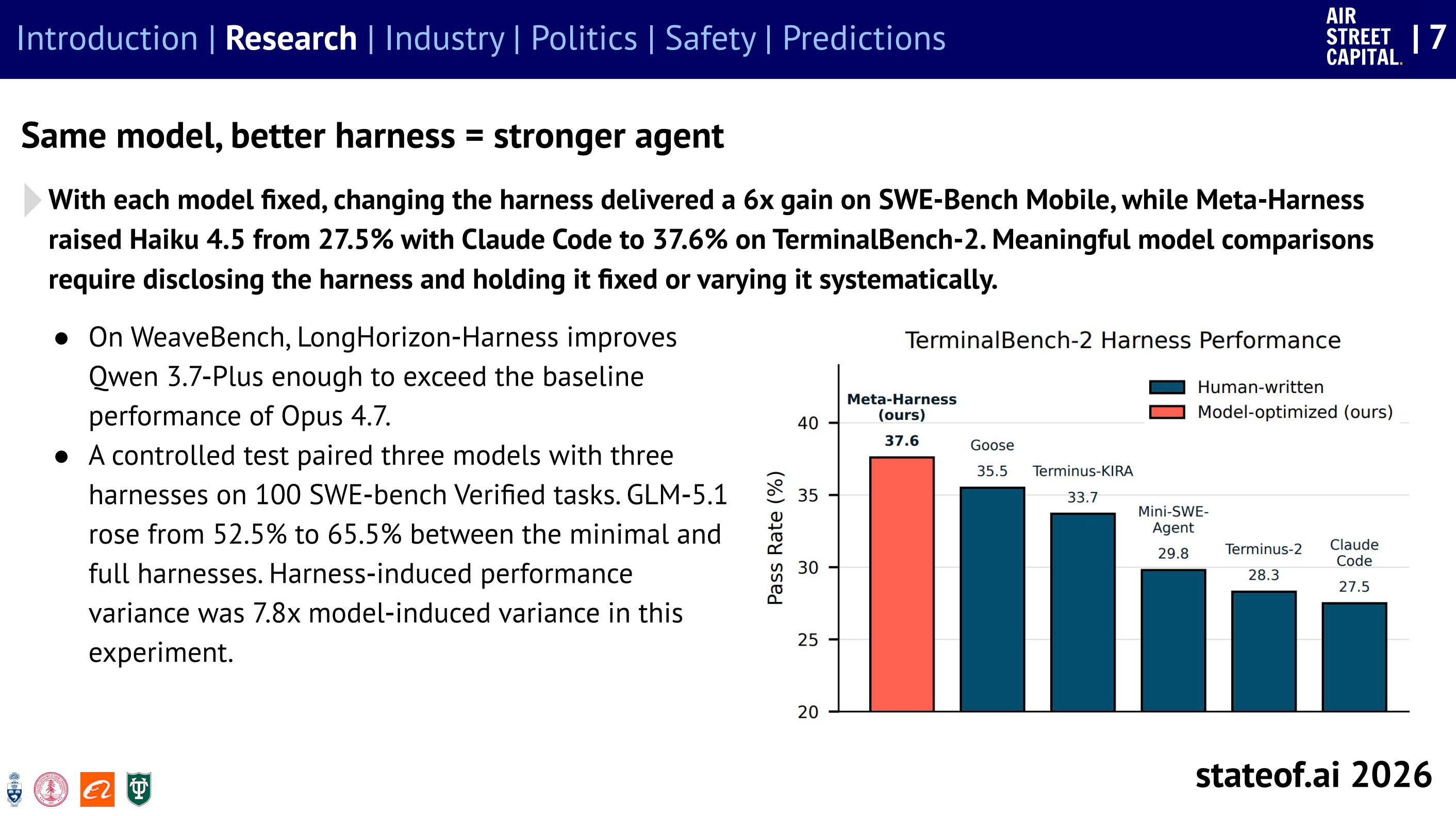
The impact harnesses still have on how models get used in practice helps explain this dynamic. Long term, I expect the value of the “harness on top of a model API” business model to keep deteriorating. For now, though, several players in the coding space are still able to squeeze out revenue and a thin margin from their custom implementations, often helped by a forward-deployed engineering (FDE) go-to-market motion.