

This week we continue with the deep dive in cloud infrastructure software, curtesy of the InfraRed report. Scroll to the bottom if you want to see many new logos of company worth investigating further.
The key takeaway
For tech sales: The biggest opportunity in cloud infrastructure software today is in private companies with high growth that can reward you both with strong OTE and a successful exit. AI has accelerated the timelines for companies to achieve this outcome, and after several years of most reps chasing either stability or higher OTE, we are back to evaluating the full earnings potential in front of us.
For investors: While sales reps can benefit from this wave of growth, most investors are limited to public companies. I know that some of you will not like hearing this, but it might be time to seriously evaluate also becoming a VC.
The bigger picture
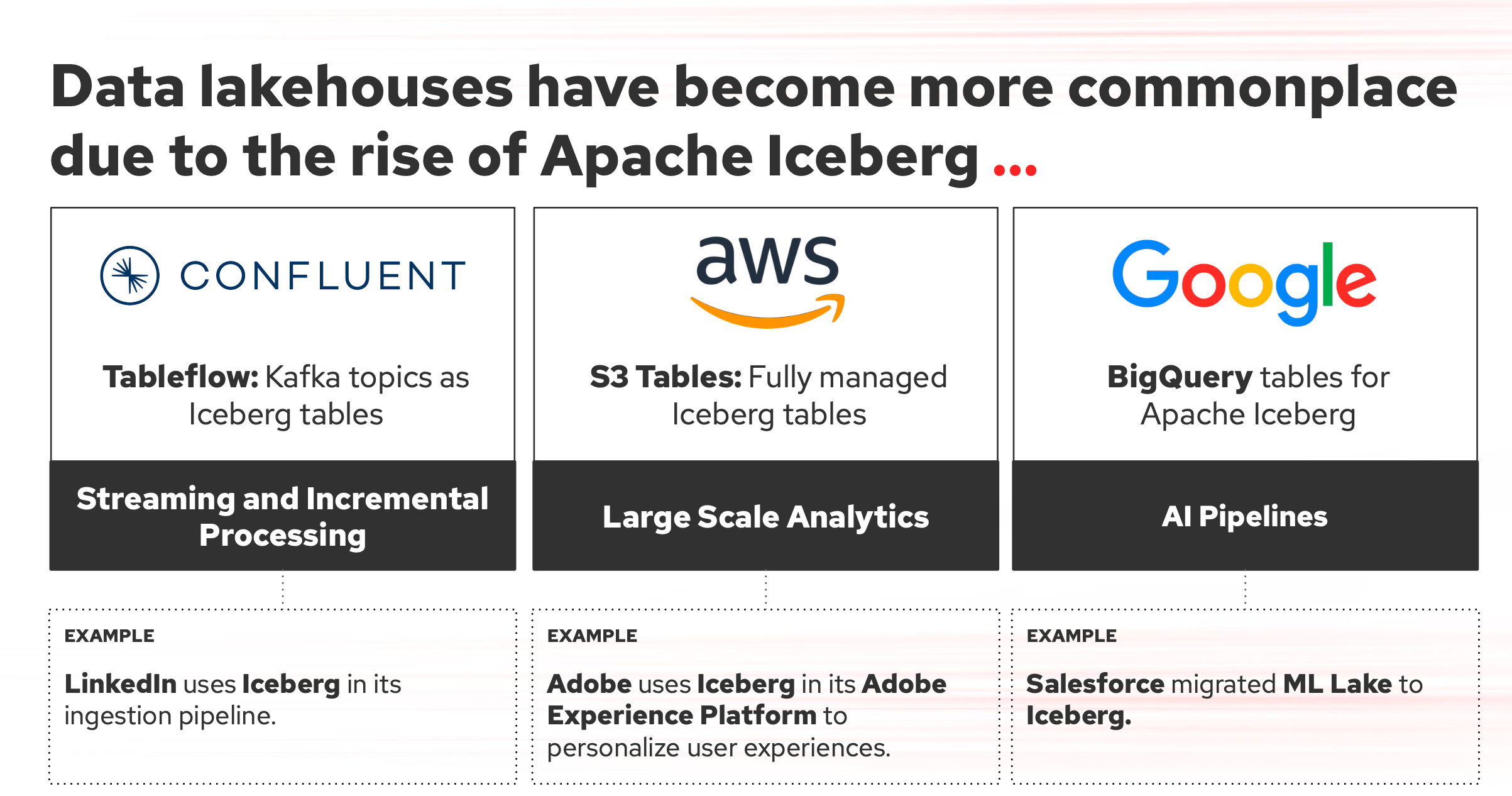
Apache Iceberg has emerged as one of the leading open table formats in the data lakehouse ecosystem. This format enables organizations to store and manage large volumes of data with proper governance, transactions, and time-travel capabilities. For AI workloads, it works well for managing training data, feature stores, and batch processing pipelines, while vector databases remain the preferred choice for inference and similarity search use cases.
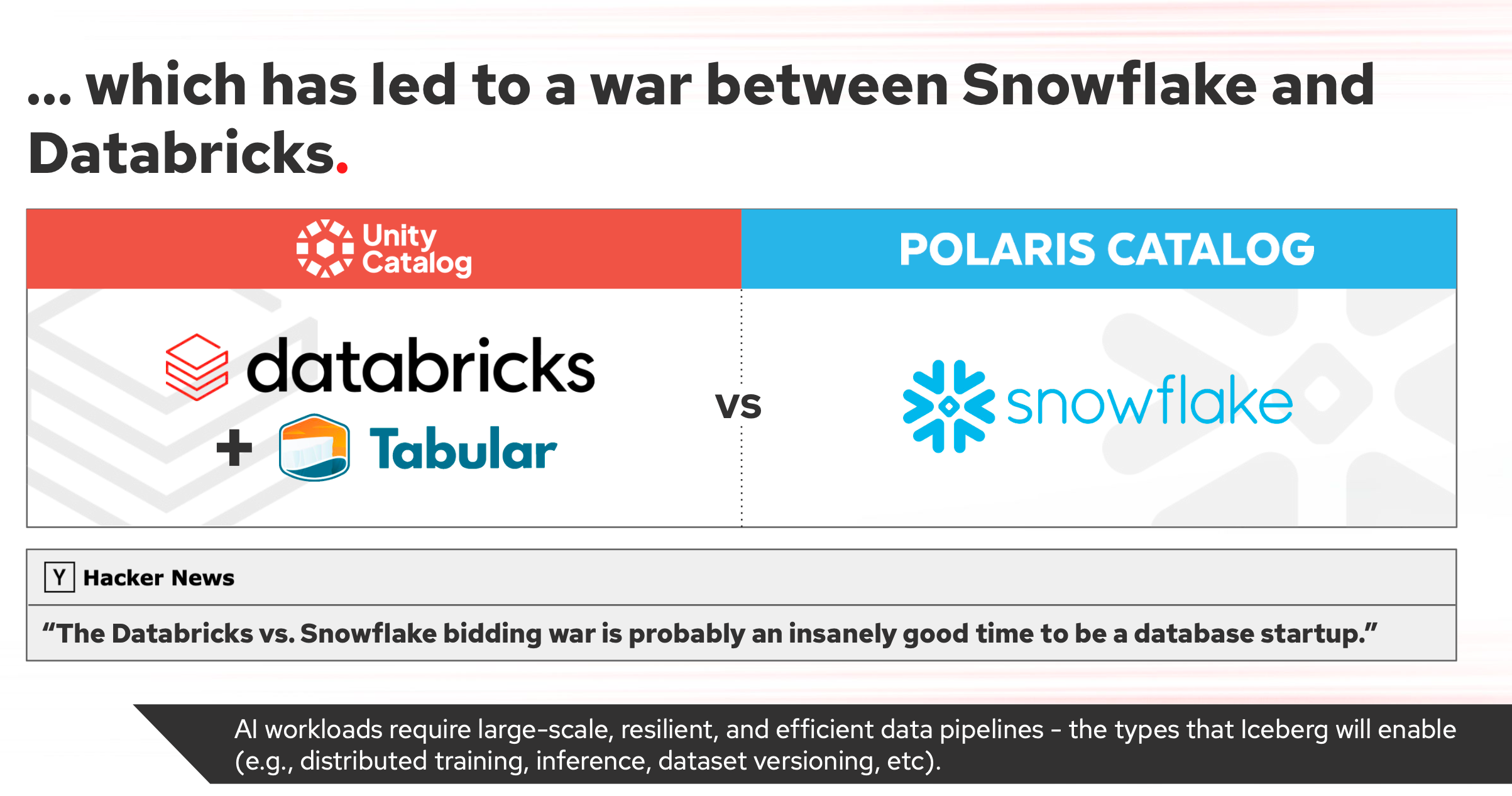
The side effect was that LinkedIn got overrun with aggressive and bitter spats between Databricks and Snowflake GTM members, with posts even getting C-level executives to chip in and yell at the competition.
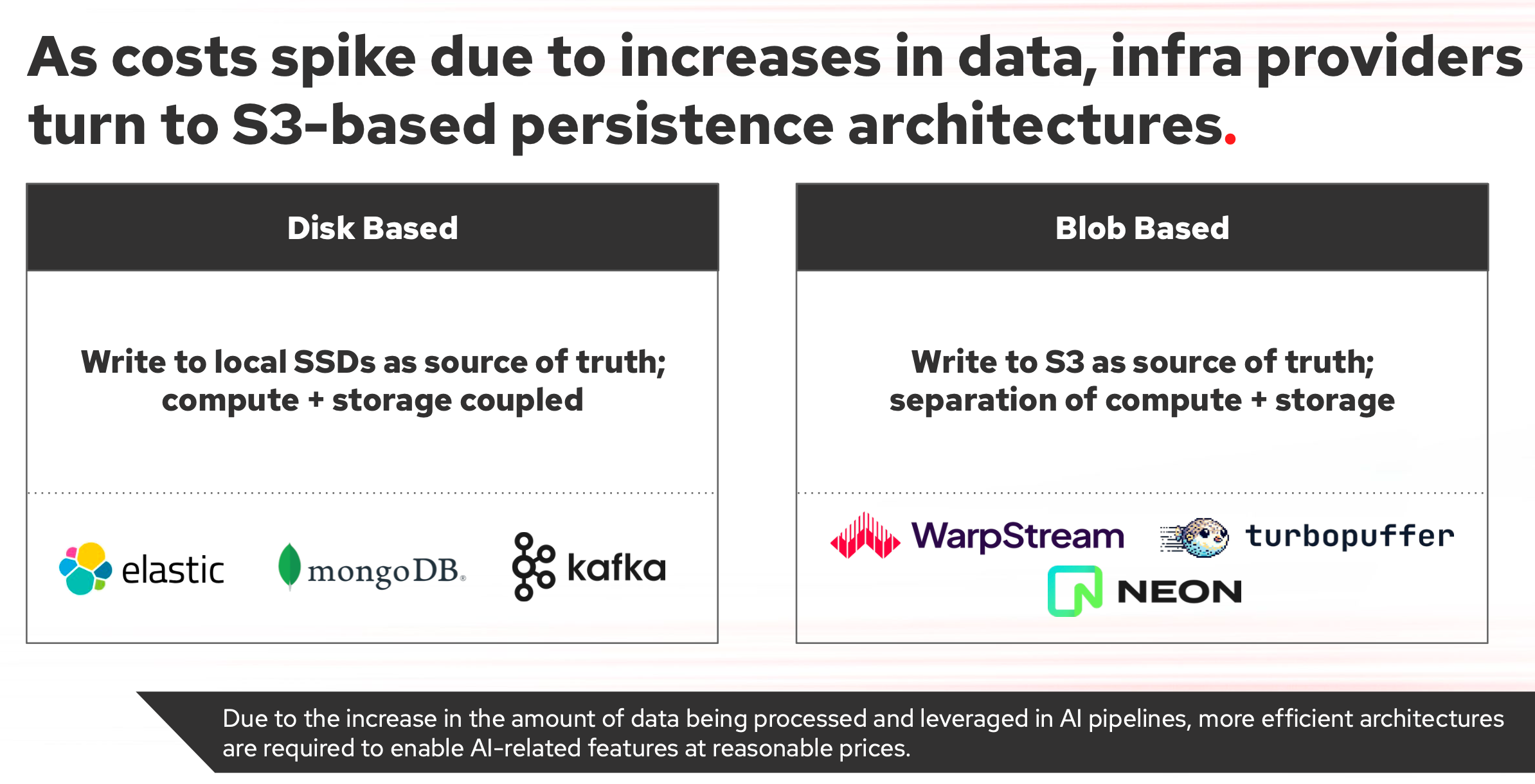
AI workloads have other downstream effects in the data layer, with companies chasing significantly more efficient architectures in order to maintain a reasonable cost basis as data workloads increase in scope and size.
This slide is a good example that we should always take VC content with a grain of salt - Elastic already redesigned their cloud solution to be built on top of S3 buckets, while both MongoDB and Kafka have offered S3 storage integrations (as bolt-on functionality and with performance penalties).